Where should website enquiries go so none get missed?
Website enquiries should land in one inbox that whoever answers the phone reads every day. They should be sent from an address at your own domain, so Gmail or Outlook can check where they came from, and a copy should sit somewhere outside email. When website enquiries are going to spam, the form is usually sending them in the customer's name, and that is a setting we can change.
Say a kitchen fitter's website went up five years ago. The form sends each enquiry to an old Hotmail address the fitter made for the business and rarely opens, and it writes the customer's own email address into the From line. One Tuesday a homeowner asks for a quote on a full kitchen. The message goes to junk. Nine days later the same homeowner rings to say they have gone with another firm, and asks whether the form works at all.
The spam filter did its job there. Gmail's sender guidelines ask everyone sending to a Gmail address to authenticate the domain the mail leaves from, and tell senders not to put a Gmail address in the From line of mail Gmail did not send. A form that writes the customer's Gmail address in that line fails both on every message, and Gmail may mark it as spam or refuse it.
On a site we build, the form sends from an address at your own domain, such as website@yourbusiness.co.uk, and we set up that domain's authentication so the receiving mailbox can confirm the message came from you. The customer's address goes in the reply-to field. You press reply and the answer reaches them like any other email.
Where it lands depends on who answers. Send every enquiry to the inbox of whoever picks up the phone during the day, and to nobody's personal account. A partner who does the books in the evening sees a quote request at nine at night, by which time the customer has rung two other firms. People leave and change phones, and the enquiries should keep arriving where the business can see them.
We also keep a copy of each enquiry outside the inbox. Our own contact form runs through Formspree, which relays each message to us and keeps a copy, so a message that went astray can still be found. A business with more than one way in can add our CRM and enquiry routing, which tags each enquiry by where it came from, such as the worktops page or the Google Ads landing page. The subject line tells you before you open it. At the end of the month you can count which page brought in work.
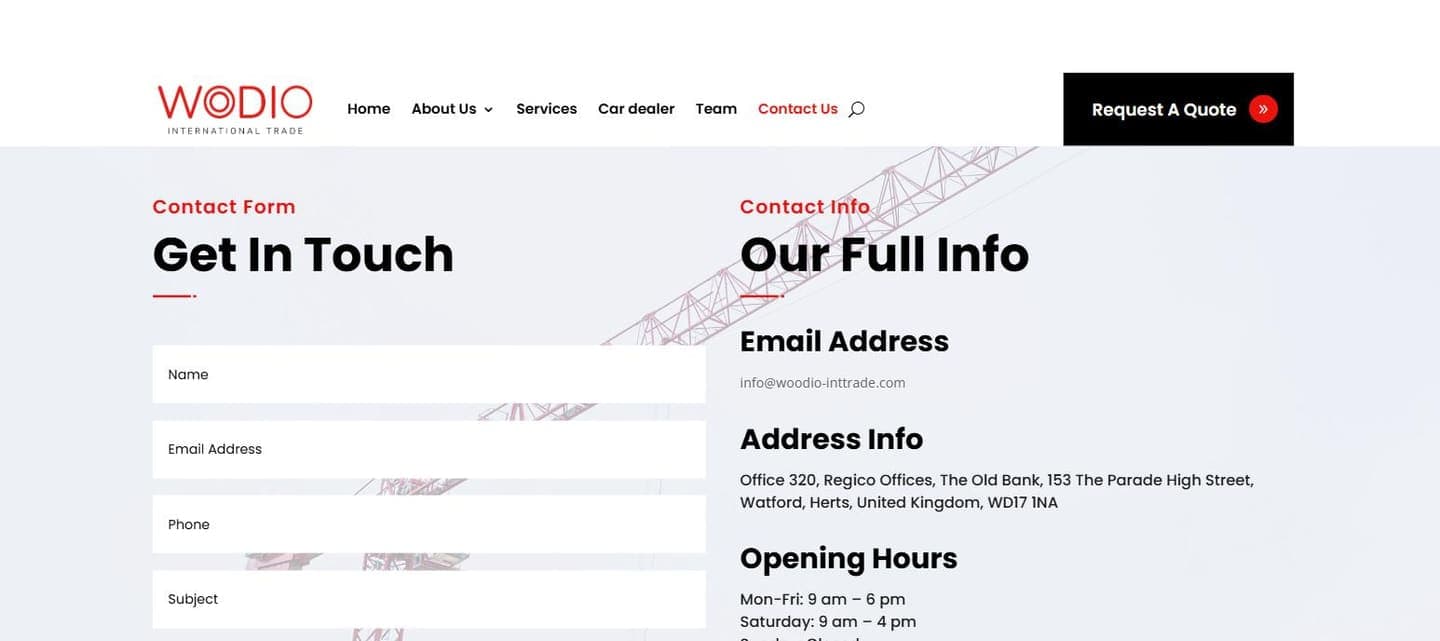
Woodio International Trade, a wholesaler in Watford, takes its quote requests through one short form that asks for the product area, the rough volume and a way to reach the buyer. The product area tells the team who should pick it up. Quote requests went from about two a month to about ten after the new site, by Woodio's own records, and at ten a month a request left in a junk folder is money walking off.
A CRM is worth paying for once two or more people answer enquiries, or once you lose track of who has had a quote. A sole trader with four enquiries a week does fine with one good inbox and a habit of checking it at lunch. We would rather set that up well than sell you a system you open twice.
You can test your own form today in five minutes. From your phone, fill it in with a personal Gmail address, write the word test in the message and send it. Then check the inbox and the junk folder on the phone of whoever answers enquiries. If it takes more than a minute to arrive or lands in junk, the form needs fixing. Run the same test after any change to the site.
The form and its sending address are part of any site we build, from £800 for a Starter website. Before launch we send enquiries through every form from a phone and check where each one lands. A redesign, from £900, covers the same work on a site you already have. If yours is losing enquiries, send us its address and we will tell you where they go now and what it would take to fix.
Starting prices, UK, before VAT
Starter website
from£800
Up to 5 pages. The essentials, built to bring in enquiries.
Website redesign
from£900
Keep what works, fix what loses you enquiries, look current again.
Written by Maksym Gavrylenko · Published